sarah
sarah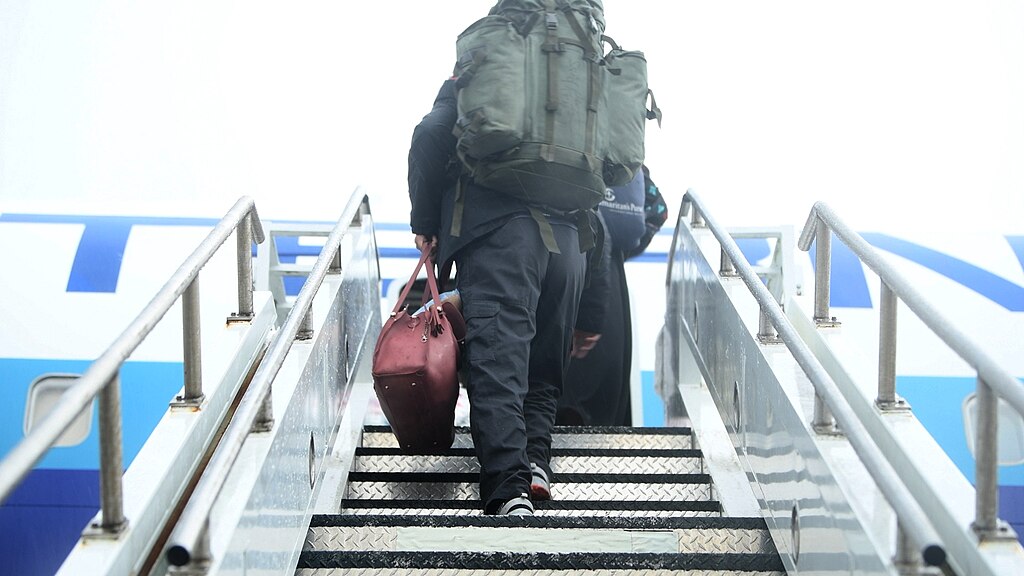
By Nat Winthrop
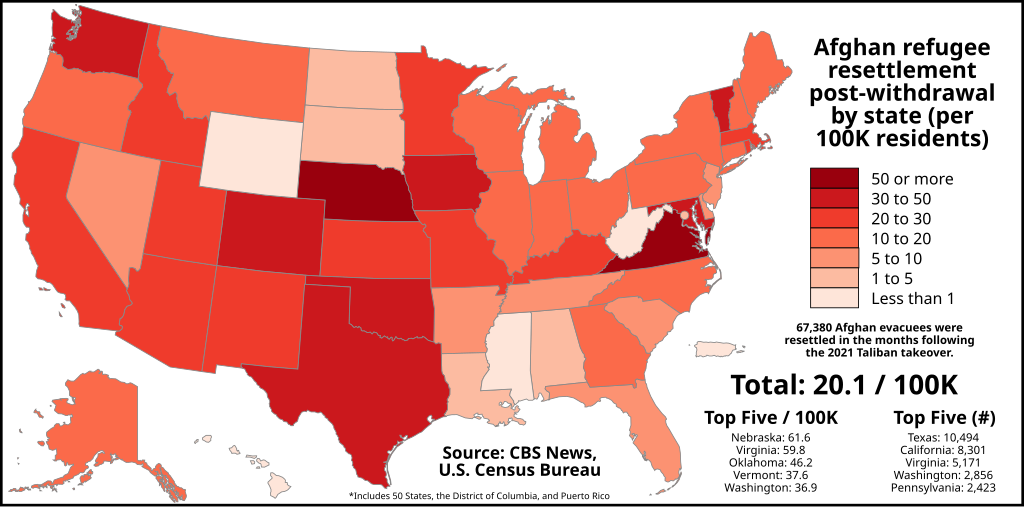
Of over 650 Afghan refugees and asylum seekers in Vermont, about 50 have settled in Montpelier, including more than 30 children; they comprise a dozen families who have made Montpelier home since the Taliban seized power in 2021.
Living in different neighborhoods, they are largely invisible to the community at large, all the more so since the Trump administration has slowly been eroding protections they and other Afghans across the U.S. used to have. Occasionally you might notice a mother in a hijab with her kids downtown or at a playground. The children are assimilating more quickly than their parents in the local schools, mastering a new language, and many are actively participating in various sports. Volunteers and the community at large have welcomed these new arrivals and helped ease their adjustment to a fundamentally new and foreign culture.
The largest number of Afghans in Vermont reside in Chittenden and Windham counties. All male heads of households worked for the U.S. military, intelligence, or diplomatic services during the 21-year war between the U.S. and the Taliban that culminated with the August 2021 sudden and chaotic U.S. withdrawal from the Kabul airport. Many of the Afghans in Montpelier, including women and children, were airlifted during the 48-hour evacuation, but others took refuge in neighboring Pakistan, and many remain in Afghanistan, laying low.
Evacuees typically had to take a circuitous journey through American bases in countries such as Qatar and Germany before entering the U.S., and then they usually bounced around different states before settling in Vermont.
The Central Vermont Refugee Action Network (CVRAN) has coordinated the critical support networks for the local Afghan families with support from the U.S. Committee for Refugees and Immigrants. The CVRAN staff and board of directors assign local sponsor or “family friend” volunteers to each Afghan family. They work with a network of over 200 volunteers who collectively contribute as much as 500 hours of service a week, including providing help finding housing, applying for government programs, applying for jobs, driving lessons, and much more.
“Montpelier has been wonderfully welcoming; the community (has created) an enormous sense of belonging,” says CVRAN Executive Director Ali Zenie.
“This is a brutal time for refugees and asylum seekers in the United States; the news about the attacks of the federal administration against all immigrants is constant and overwhelming,” says CVRAN board president Kelly McCracken. “I see families who are very distressed, very, very worried about family back home,” she says, adding that some asylum-seeking clients “are scared to go to their regularly scheduled immigration appointments, to go to work, to gather with friends, to leave their homes.” (CVRAN supports other local asylum seekers, many from Africa, who are at significantly greater risk of detention and deportation than are Afghans.)
Because of these fears, many local Afghans are reluctant to appear in media reports or have their pictures taken. An exception to this is Fazal (a pseudonym), who served in Afghan special forces for seven years and provided security for U.S. special forces. Both of his parents were killed, separately, by the Taliban; his mother was killed by a bomb and his father was shot. Fazal was evacuated around Aug. 19, 2021 from the Kabul airport with his wife and six children; another daughter was born after their arrival in Montpelier in December 2021. He works at the Darn Tough Socks mill in Northfield.
Fazal, through a translator, says he feels safe, because members of the U.S. special forces who he helped protect invited him and his family to the U.S.; he believes they aren’t in danger of being detained or deported. He adds that their journey and circumstances have been planned by God, who he trusts will continue to protect them and provide them with bread, water, and other essentials.
Nonetheless, in early October Vermont refugees and asylum seekers abruptly lost their eligibility for SNAP (the Supplemental Nutrition Assistance Program, formerly known as food stamps). The CVRAN website calls this a devastating blow, noting “we estimate that central Vermont refugee families are going to collectively lose close to $9,000 a month in food assistance.” And while the Vermont Food Shelf and Just Basics in Montpelier provide much needed food assistance to these families, it can’t compensate for the loss of SNAP benefits.
“The Trump administration has done little to keep its promise to Afghan allies who risked their lives in support of U.S. military and diplomatic missions over a 21-year period,” says Molly Gray, director of the Vermont Afghan Alliance and former lieutenant governor.
“Trump and his administration have taken a number of steps to end immigration protections,” says Gray. “These include dismantling the U.S. refugee admissions program in January, ending ‘temporary protective status’ for eligible Afghans, and implementing a travel ban for Afghan nationals.” Also, VTDigger reported on Oct. 7 that ICE (Immigration and Customs Enforcement) is planning to bolster its digital surveillance of new arrivals’ social media accounts in Vermont at the direction of the Trump administration. All this adds to the fear of detention and possible deportation by ICE and the Department of Homeland Security.
“People are terrified, even those who are completely safe,” says retired local attorney Seth Lipschutz, who provides pro bono legal help to Afghans in central Vermont. Lipschutz has provided substantial legal assistance for several local refugees and asylum seekers.
“I don’t think CVRAN could do what we do without him,” says CVRAN’s Ali Zenie.
As opposed to people arriving without notice at the U.S. border, those fleeing dangerous circumstances in their native countries often receive refugee status in refugee camps in third countries. “The determination of who counts as a refugee and who counts as an asylee (an asylum seeker who has been approved) is largely a political definition,” explains Kate Paarlberg-Kvam of the VT-NH Asylum Support Network. “There is no illegal way to seek asylum; people show up at the border to save their own lives, and that’s what they’re supposed to be allowed to do.”
A second Afghan, who I’ll call Abdul, started working as a translator for the U.S. Army in Kandahar in 2011 when he was 18-years-old at a base he says was surrounded by Taliban forces and land mines and was in constant danger. Food and supplies were air dropped to the base. Three years later he left to attend college there, where he earned a bachelor’s degree in mathematics. During this time, the Taliban put a reward on his and his cousin’s heads. He grew a long beard, married, and fled with his wife and sister across the border to Jalalabad, Pakistan. They stayed there for more than two years, supported by Kate Ruprecht, a Californian who works with a nonprofit empowering Afghan women to get education.
Ruprecht raised funds to enable Abdul’s sister to get a ticket to Toronto; she then contacted attorney Seth Lipschutz through CVRAN, who in turn helped get Abdul to Vermont. Abdul says his time in Pakistan was very difficult; he was despondent and anxious about the unlikely possibility of he and his wife and young son returning to Afghanistan.
A U.S. army colonel who knew Abdul from Kandahar met their plane in Boston and drove them to Montpelier, where a CVRAN board member put them up until they could get their own apartment. Abdul says he has done everything to make his family’s transition to life in Vermont as seamless as possible. He sees a bright future for them; he says “I will live here in Montpelier till the end of my life.”
Another Afghan I interviewed with his wife also preferred to remain anonymous; I’ll call them Khan and Salma. Khan served in the Afghan army at a base near the Iran border and later provided security at the U.S. Embassy in Jalalabad. His mother was murdered by the Taliban, he says. He says his four brothers and four sisters, one of whom lost her legs in the bombing that killed their mother, fled across the border to Pakistan when the Taliban took over, but some have returned to Afghanistan.
Khan tells the story of one of his brothers fleeing on foot to Iran, then across Turkey and Bulgaria before landing in a German refugee camp, where he lives today. As for him and Salma, after they arrived in Philadelphia from Germany with their two young children in 2021, they were shuttled to New Mexico, then Boston, before joining a relative in Vermont.
The couple’s two older children attend a local school, where Salma found a job until she gave birth to a daughter. Salma is quite social and has made many friends since she arrived. She and Khan say all their kids speak perfect English. Khan, along with three other Afghans, works as a custodian in the Montpelier school system. Others have found jobs at Ben & Jerry’s, Hunger Mountain Co-op, and at the Central Vermont Medical Center.
Says Tom Allen, director of facilities at Montpelier High School (MHS), “I really feel that, especially when their kids are in school, it’s a great community connection, it’s a great thing to have them working here.” Adds MHS Athletic Director Matt Link, “It’s really been a great experience, great to have different cultures, backgrounds. Sports is a universal language …”
Sylvia Fagin, who with two other multilingual learning teachers teaches new arrivals English in the Montpelier schools, says of the Afghan kids, “They come with incredible skills and assets, including patience and resilience; they are flexible, fast learners … They’ve been through so much, they really come to us with a lot to offer.”
Steve Dale, Fazal’s sponsor and neighbor, effuses, “They have an amazing family; their kids are extraordinary.” Dale, who often drives some of them to practices and games, explains that one son plays soccer, basketball, and baseball. He says that while Fazal and his wife are homesick at times, “they love Montpelier … the kids are absolutely integrated into this community and they’re doing fine.” He cites “an amazing amount of support” from local residents and volunteers.
The Afghans all arrived here either as ‘humanitarian parolees’ or ‘special immigrant visas’ (SIVs, granted to Afghans and Iraqis who worked for the U.S. government), or with ‘temporary protective status,’ which Trump has inexplicably since revoked. Many local Afghans arrived with green cards (or Permanent Resident Cards), and several more have qualified for them since their arrival here. Green cards allow immigrants to live and work permanently in the U.S., and they offer many rights and protections. Though Fazal and his family have yet to receive their green cards, he is confident they will get them soon.
Just last week, CVRAN launched a $150,000 fundraising campaign seeking more volunteers as well as donations. In its letter that kicked off the campaign, after citing the ending of SNAP benefits and explaining “we are in full mobilization mode,” they write, “We struggle to stay optimistic and to shake off the bad news we hear daily. And yet, we have witnessed weddings, new homes and jobs, thrilling summer camp experiences, new driver licenses, a high school graduation, and many more mundane and exceptional events. Many of our families are managing to thrive in this inhospitable climate: working, learning, and supporting themselves and each other. Sharing this joy is the antidote to despair.”