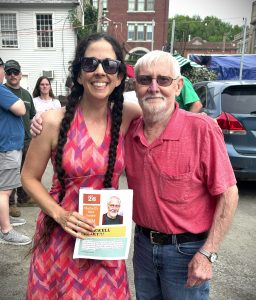
Joseph Moser

Hundreds of films about the American criminal justice system put viewers in the position of rooting for an innocent person caught up in the system. We are thrilled by the valiant, unambiguous battle of a noble protagonist yearning to regain freedom and clear their name. Bess O’Brien’s poignant documentary “Coming Home” forgoes that narrative formula to tell real-life stories that are more nuanced than miscarriage-of-justice tales yet equally as urgent and compelling. O’Brien’s film focuses on people in our communities, including Barre, Montpelier, and St. Johnsbury, who are offenders but take responsibility for their crimes and strive to change their lives. The 2018 documentary is gut-wrenching at times but also brimming with love and humanity.
On Wednesday, Nov. 12, at 5:30 p.m., the Aldrich Library in Barre and the Barre Community Justice Center will host a free screening of “Coming Home,” followed by a panel discussion.
Halfway through the film, a parole officer says of offenders trying to reintegrate into society, “They need someone to see them as more than the worst damn thing they ever did.” This insight crystallizes the dilemma facing the five flawed, sensitive, introspective people at the center of the film: Mark, Jake, Tara, Deb, and Travis. They have all severely damaged their close relationships and suffered from serious addiction issues that contributed to their crimes. Still, they are sustained by dreams of reconnecting with loved ones, starting new jobs or businesses, and finding peace. In their recovery and reintegration into society, they have an advantage that few people on parole have access to in this country: they are each at the center of a COSA, or circle of support and accountability.
Circles of support and accountability do not substitute for, but function alongside, parole officers from the Vermont Department of Corrections who monitor offenders. The COSA professionals and volunteers who work with the parolees — for at least one full year — offer them friendship to counter the intense isolation they experience as formerly incarcerated people. This is the support element of a COSA. At the same time, each person at the center of a COSA faces confrontational questions from their group to help them prepare for inevitable challenges and setbacks and to be clear-eyed about their past offenses and the risk of recidivism. Herein lies the accountability piece of the program.
To her credit, director O’Brien does not flinch from showing some of the parolees backsliding into destructive old patterns. In fact, two of them violate their parole and return to prison. For the most part, though, “Coming Home” represents the success of COSAs as a tool for promoting restorative justice and better communities. As University of Vermont researcher Kathy Fox states in the film, ex-offenders who complete COSAs are 29% less likely to be reincarcerated. Although this statistic might not be persuasive enough to sway skeptics, most viewers will find it difficult not to be compelled by the stories of the five people struggling for redemption with the help of devoted professionals and volunteers.
A title at the conclusion of “Coming Home” states that “As of 2018, Vermont has facilitated more COSAs than all other U.S. states combined.” Seeing this, I felt proud of our state but also saddened (though hardly surprised) by the lack of support that parolees receive elsewhere in the country.
A lyric by singer-songwriter Gregory Alan Isakov tells us that “If it weren’t for second chances, we would all be alone.” These words came to mind as I finished watching this insightful and affecting film. As “Coming Home” convincingly demonstrates, when second chances come with the prospect of repaired lives and safer communities, we should not hesitate to offer them.