“I was one of the lucky ones,” says Plainfield resident Susan Grimaldi. She’s looking around at her kitchen with its boarded up wall and missing pantry. More than two and a half months after the flood, she’s finally returned to the Brook Road house she has owned for 46 years, the home where she raised her children.
Many of her neighbors will not come back. Grimaldi plans to stay for about a year and a half. In the years she’s lived beside the Great Brook, she’s seen five floods. Now she says,“I can’t stay here. It’s too vulnerable.”
Grimaldi remembers the evening of July 10, almost three months ago, when many Vermonters braced for the unthinkable, the threat of a new flood on the anniversary of 2023’s event.
“I decided to drive down to my daughter’s in southern Vermont,” she says.
She returned two days later to an altered landscape. Her own house was standing but the rushing waters had swirled under the foundation, tearing away walls, her pantry, her balcony, and her beloved deck. The beautiful yard behind her house was now a field of rocks, mud, and downed trees. Many of the houses around her were dark and empty.
“I was in dismay and in shock. I didn’t know what my future would be,” Grimaldi recalls.
In the village, multiple homes became uninhabitable and many roads were impassable. At first, town workers couldn’t even get to the trucks and equipment they needed for the clean up. An eight unit apartment house, known as ‘Heartbreak Hotel,’ hung over the water, its rooms on display like an abandoned dollhouse.
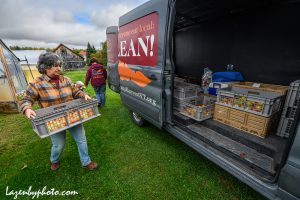
Since that week in July, Plainfield has been picking up the pieces. By the morning of July 11, Vermonters from neighboring towns were arriving with food and offers of help. Plainfield residents helped each other while dealing with their own rubble.
“The volunteers were so critical,” says Grimaldi.
Plainfield will be struggling for a while, but there’s progress.
On Tuesday, Sept. 24, the town held the second of its flood recovery informational meetings. Selectboard chair Karl Bissex began by introducing Karen Hatcher, who he described as a “master of pulling together a team of people who can get money.”
Hatcher backed him up. “If there’s money on the table for the recovery of Plainfield, we’re going to get it,” she said.
The volunteer committee who named themselves the Plainfield Grants Work Group stepped up last July when the town’s emergency management director, Michael Billinsgly, put out the call. Hatcher urged others to join. “It’s a lot of work,” she noted.
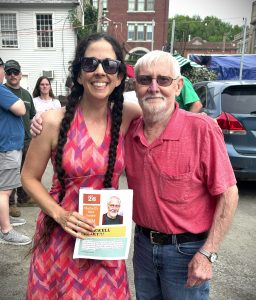
Liz Bicknell and Grace Worcester coordinate requests for individual assistance. Bicknell explained that such assistance includes a variety of needs including personal and property damage. She said the damage recovery center is now located at the Barre Auditorium and urged residents to contact FEMA officials there if they have not yet put in a claim.
“They’re so nice … and they know what they’re doing,” Bicknell said, also acknowledging that the array of organizations available to help can be confusing. “Everything has an acronym … sometimes seven acronyms, but we’re here to help you … If you need a ride to Barre, we can help with that, too,” she said.
Michael Zahner, along with Karen Hatcher, is handling hazard mitigation funding, and he had good news to share with the audience. “An unprecedented amount of FEMA hazard mitigation funding is available to Vermont towns and other eligible applicants for projects that reduce the risk of flooding. This includes $90 million from the Hazard Mitigation Grant Program and (potentially) $40 million is available from the Flood Mitigation Swift Current Program,” he said, noting that Plainfield, with its history of flooding, can now focus on becoming a “more resilient” community using nature-based methods of flood control.
Plainfield is grappling with potentially high expenses coupled with a shrinking tax base. Almost 30 homeowners are applying for buyouts and some may not be able to return.
Arion Thiboumery, who handles buyouts, offered a proposal: a piece of land away from the flood zone, could be purchased by the town, then sold as 30 lots, all of which would be within walking distance to the Lower Village and with access to utilities and roads. This plan could be carried out for little or no cost to the town, Thiboumery said. The land made available through buyouts could then be turned into flood plains.
For some families this could be a way of remaining in Plainfield, a place that may be heartbreaking to leave. As Grimaldi says of her Brook Street community, “We’re neighbors, true neighbors. We can count on each other.”